

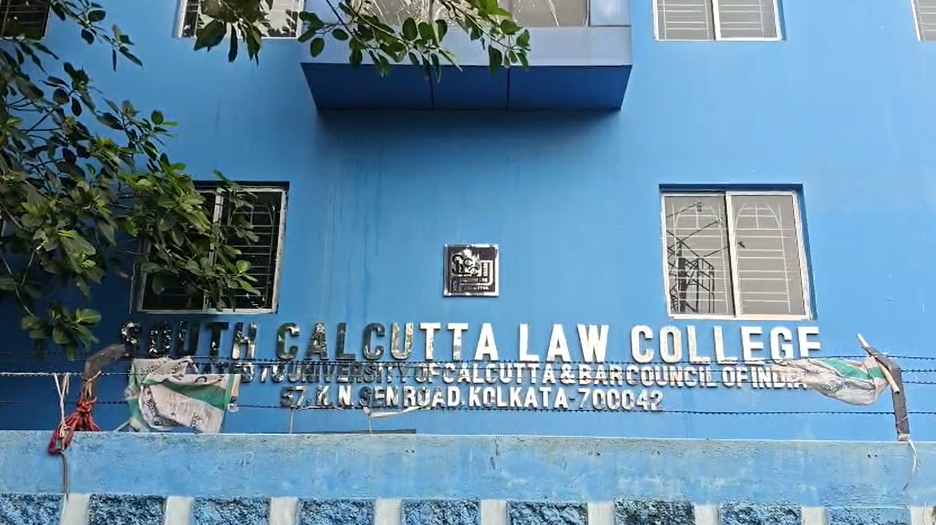
On June 25th, 2025, a horrifying crime took place in Kolkata involving the gang rape of a 24-year-old first-year law student. The incident was committed by three men and also implicated the college guard. The culprits were arrested the day after the crime. This incident is known as the Kolkata Law College gang rape case.
The Shocking Incident at South Calcutta Law College: Kolkata Law College Gang-Rape case
On June 25, 2025, a law student was allegedly gang-raped inside the college guard room by four individuals—including former student Manojit Mishra (alias “Mango”), two current students, and a college security guard named Pinaki Banerjee. According to reports, the accused confined the victim within the campus, and the assault took place in a pre-planned manner inside the college premises.
After committing the crime, the accused reportedly consumed alcohol at the scene and later visited a roadside dhaba for dinner, displaying no remorse for their actions. (Kolkata Law College Gang-Rape case)
Medical Evidence and Arrests
The medical examination of the victim confirmed forceful sexual assault, including bite marks, nail scratches, and injuries on her chest and neck. These findings supported her statement and led to the swift arrest of the main accused. The Kolkata Police formed a Special Investigation Team (SIT), which has now been expanded to nine officers to ensure a thorough investigation.
On July 4, all four accused were taken to the crime scene for a five-hour reconstruction of the incident. The police are also examining over 7.5 hours of CCTV footage to establish the sequence of events.

Campus Politics and the Influence of Manojit Mishra
The main accused, Manojit Mishra, is a former student who allegedly controlled 10–15 admissions every year in exchange for bribes ranging from ₹50,000 to several lakhs. His influence within the campus had been growing for years, with past instances of aggressive behavior reportedly overlooked by the college authorities. Students claim that this unchecked power created an unsafe and hostile environment, particularly for women.
Role of the Security Guard and Institutional Negligence
The involvement of the college security guard has intensified scrutiny. He is accused of enabling the crime by locking the campus gates and leaving his duty during the assault. His custody has been extended until July 8, and further investigations are underway regarding the college administration’s possible negligence. (Kolkata Law College Gang-Rape case)
The police are also reviewing the governing body meeting records of the college to assess whether complaints or red flags about Manojit’s behavior were previously raised but ignored.
Applicability of Law: Kolkata Law College Gang-Rape case
the implementation of India’s new criminal laws on July 1, 2025, this case is now governed by the Bharatiya Nyaya Sanhita (BNS), 2023, the Bharatiya Nagarik Suraksha Sanhita (BNSS), 2023, and the Bharatiya Sakshya Adhiniyam (BSA), 2023. The primary provision applicable here is Section 63 of the BNS, which replaces the old IPC Section 376 and deals with the offence of rape. It prescribes a minimum punishment of 10 years, extendable to life imprisonment. Since this was a case of gang rape, Section 70 of the BNS applies, which carries a minimum of 20 years’ imprisonment, possibly extending to the remainder of natural life, along with a fine for the victim’s rehabilitation.
Furthermore, the victim was allegedly confined inside the campus, so Section 124 of the BNS (formerly IPC Section 342) dealing with wrongful confinement is also attracted. The role of the security guard who allegedly helped in securing the premises for the crime brings in Section 188 of the BNS (formerly IPC Section 34) — which deals with acts done with common intention. If a pre-planned conspiracy to commit the offence is proven, Section 61 of the BNS (criminal conspiracy, replacing IPC Section 120B) would also apply. Additionally, if there is any attempt to tamper with CCTV footage or destroy evidence, Section 111 of the BNS (replacing IPC Section 201) would be invoked.
Procedurally, the case is governed by the BNSS, 2023, where Section 173 mandates prompt registration of an FIR in cognizable offences such as rape. The victim’s statement is recorded under Section 184, and the chargesheet must be filed within 60 to 90 days as per Section 193. The trial, given the serious nature of the crime, may be conducted in a fast-track manner under Section 283 of the BNSS. As for evidence, under the Bharatiya Sakshya Adhiniyam (BSA), 2023, medical reports, victim statements, CCTV footage, and other electronic records are all admissible. The victim’s character or sexual history cannot be used against her, maintaining her dignity and privacy.
This case highlights not only a heinous crime but also the urgent need for institutional accountability and the strict enforcement of the new criminal laws. With the Calcutta High Court monitoring the investigation and directing both the State and the college to file detailed reports, the legal system is now under pressure to ensure justice is swift and fair under the reformed legal framework. The matter of Kolkata Law College Gang-Rape case is too sensitive and need to be handle with the same.
High Court Monitoring and Public Response
The Calcutta High Court has taken suo motu cognizance of the case. On July 3, it directed the West Bengal government and the college authorities to submit detailed status reports, institutional records, and an affidavit by July 10. Meanwhile, the victim’s family has moved the court to be made a party in the Public Interest Litigation (PIL) seeking a CBI probe, although they currently express faith in the SIT.
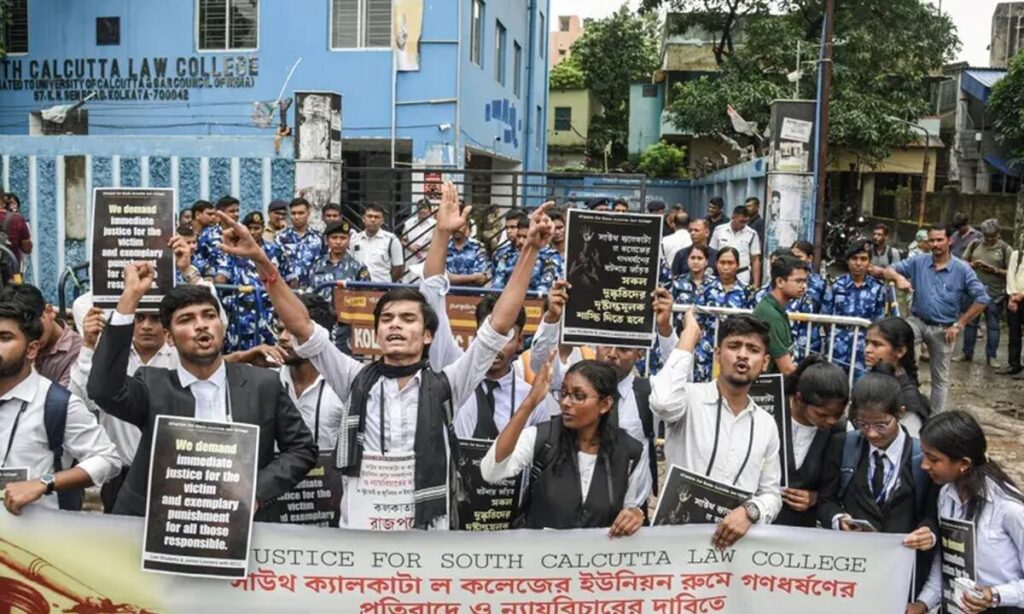
The incident has triggered a wave of student protests, women’s rights rallies, and widespread criticism of the deteriorating safety standards within academic institutions in West Bengal.
The incident of Kolkata Law College Gang-Rape case or the rape case in Kolkata is not new because we already saw the same case last year as well when we got to know about the RG Kar Medical College Rape case with the Trainee Doctor.
Conclusion: A Call for Justice and Systemic Reform
The Kolkata Law College rape case is more than just a brutal crime—it is a reflection of deeper institutional failures and unchecked abuse of power on campuses. As the investigation progresses and the High Court monitors the developments, students, activists, and legal experts alike are demanding swift justice for the victim and systemic reforms to ensure such heinous acts are never repeated.